Is love an emotion?
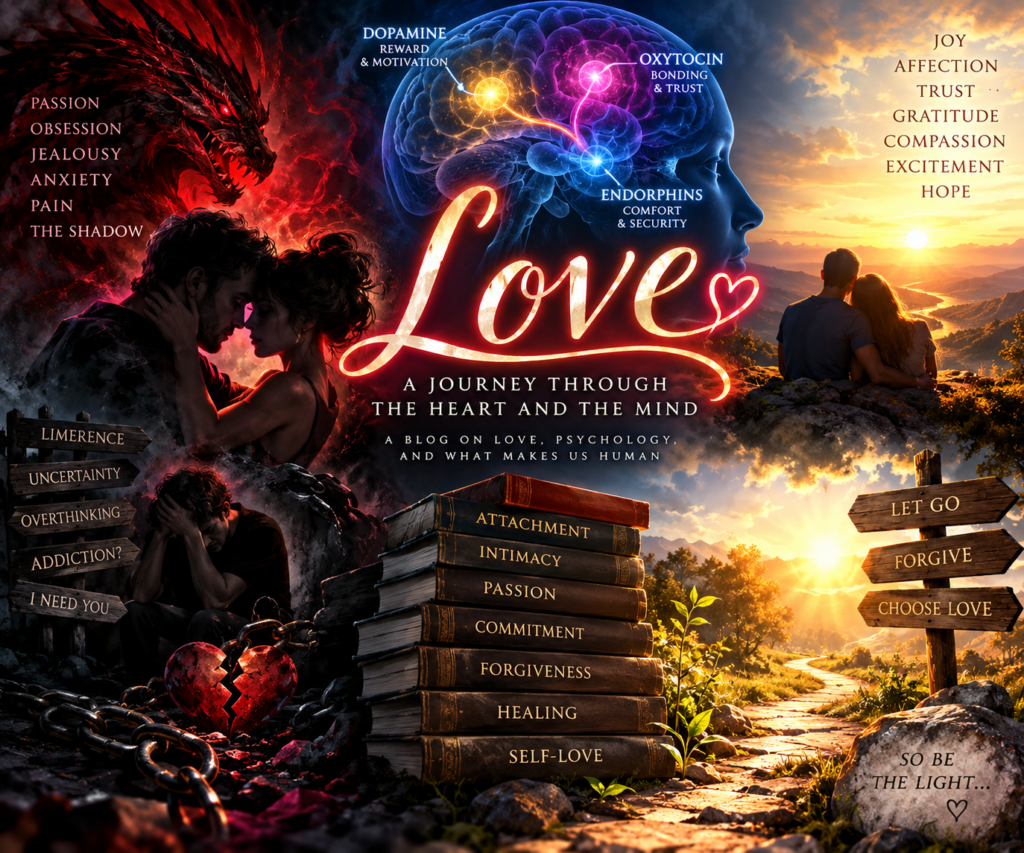
Well, psychologists view love as a complex emotional state, or an affective system, so I would say yes, love is an emotion, but not the same as anger, fear, or joy.
So why is love not considered a basic emotion? What are basic emotions? According to Paul Ekman, basic emotions are: happiness, sadness, fear, anger, disgust, and surprise. These emotions occur quickly, have distinct facial expressions, are short-lived, and serve immediate survival functions. How is love different? Well, it develops over time, can last for years and sometimes even decades (rarely decades, but it does), it includes many different emotions, and it changes depending on the relationships and circumstances.
Let’s look at what emotions love is actually made of. Well, it is made of: joy, affection, trust, gratitude, compassion, excitement, jealousy (yea, this one is extremely active here), anxiety, sadness, and hope.
Now let’s look at the neuroscience of love.
I, for one, think that love makes us crazy, possessive, and a little insane, but you can comment and let me know what you think, my dear reader. According to science, love involves several brain systems working together. The brain releases some hormones when we are in love, like dopamine, reward and motivation, oxytocin, bonding and trust, and endorphins, comfort and security.
Brain imaging studies have shown that romantic love activates reward pathways similar to those involved in motivation and goal pursuit. Stop a second and think: how do you feel when you are motivated or in pursuit of some goal? You feel great, right? So, the question that I ask is: are we biologically seeking a fix?
According to research, love is distinct from addiction or simple pleasure. Again, I ask you: is it a complex addiction? Do we not feel like addicts when we are in love? We cannot get enough of it; we are possessive and borderline crazy…
Let us dig a little deeper into this. Psychologist Robert Sternberg proposed that love has 3 components: intimacy – emotional closeness, passion – physical attraction and desire, and commitment – the decision to maintain the relationship. (Here we can all think a bit: are we really committed to our relationship, or are we addicted to the feeling we get from it, and we will do anything to keep getting that feeling? Sounds like an addiction, right?)
A reason love is so difficult to define is because it changes over time. According to evolutionary psychology, love helps us survive. From an evolutionary perspective, love has developed because it increased our chances of survival. So, have you ever thought that love is a means to your survival? I bet not, but I guarantee you that we have been in a position where, when love stopped, we thought of doing all kinds of harm to ourselves and others, including the person that we loved to the moon and back. And then, all of a sudden, we hate that person to the moon and back twice. What happened?
Psychologist John Bowlby proposed that our earliest relationships with caregiver’s shape how we love as adults. His work was later expanded by Mary Ainsworth. They both identified different attachment styles.
Secure attachment: People tend to trust others, communicate openly, feel comfortable with intimacy, and recover well after conflict.
Anxious attachment: People may fear abandonment, need constant reassurance, become jealous more easily, and overthink relationships. (And yes, we suck at this, we overthink and mostly think of all the bad stuff that probably makes no sense in reality, but then again, we are crazy when we are in love, or are we?)
Avoidant attachment: People often value independence, struggle with emotional closeness, withdraw during conflict, and suppress vulnerable emotions.
Psychologist Robert Sternberg proposed that love consists of three components: Intimacy – emotional closeness, trust, friendship.
Passion – physical attraction, excitement, sexual desire.
Commitment – choosing to stay together, long-term dedication (yes, DEDICATION).
Sternberg argued that the strongest long-term relationships contain all three, though the balance changes over time. (My thoughts: a lasting relationship must constantly be tweaked and worked on. It will not work on itself; you have to work on it. And I believe that if you can be a friend with your lover, that is the secret to longevity.)
Are you familiar with the word limerence? Well, most people are not. This term was coined by psychologist Dorothy Tennov. It describes an intense, involuntary form of romantic attraction that is characterized by: persistent, sometimes obsessive thoughts about one person, an intense desire for reciprocation, constantly analyzing their words, messages, and behavior, emotional highs when affection is returned, severe distress when affection is uncertain or rejected, idealization of the person, and difficulty concentrating on other things.
So, what does limerence have to do with love? Well, quite a lot. Limerence can feel exactly like love, especially at the beginning of a relationship. Your heart races when you see that person, you constantly think about them, you wait for their message, and when that message finally comes, suddenly your whole day is better. Sounds familiar, right? But here is where things get interesting. Limerence is not necessarily love. It is more about the intense need to have our feelings returned. Love, especially mature love, involves intimacy, trust, commitment, friendship, and accepting the other person as they really are. Limerence, on the other hand, often involves idealizing the person and creating a version of them in our mind that may not completely exist in reality.
Remember when I asked earlier if love could be some kind of complex addiction? Well, limerence makes that question even more interesting. We wait for the message, the phone call, the kiss, the attention, and every little sign of affection gives us another emotional high. When we do not get it, we become anxious, jealous, insecure, and sometimes even desperate. So, are we in love with the person, or are we in love with how that person makes us feel? Maybe that is one of the hardest questions we should ask ourselves when we say, “I am in love.”
A particularly important feature is uncertainty, often feeling that the other person doesn’t love you back, and this can intensify the preoccupation. There is research connecting intense romantic attraction with the reward and motivation systems in the brain, which helps explain why early romantic attraction can feel almost addictive. However, we should be careful about calling it literally an ADDICTION.
Psychology actually separates “I love this person” from “I need this person to love me.” The second one is much more psychologically consuming. You can love someone deeply while accepting that they may not reciprocate. And here is where someone can say, “I know this relationship isn’t good for me, but I can’t stop thinking about them.”
Have you been in this situation, or do you know someone who has been there? I think we have all been there once or twice. Maybe we don’t want to face ourselves, and we don’t want to lose face with ourselves, if not with others. But again, love makes us crazy, borderline psychotic, or just plain-ass compliant, and sometimes, or quite often, our brain is in self-preservation mode and keeps some stuff hidden from ourselves.
This can remain hidden from us for a lifetime, but it can eventually surface in therapy. So, my dear reader-listener, talk to someone, because unprocessed problems or trauma can show their ugly face when we least expect it. And I can, from experience, tell you that the “Shadow” is peeking from around the corner and preparing to take over the second we give it a chance.

I recently began an experiment of sorts. I engage people in conversations. As some of you know, I have the gift of the gab, as they say (“the gift of the gab” is an English idiom meaning a natural talent for talking easily, fluently, and persuasively—compliments of ChatGPT), and I do it everywhere and with everyone.
I have to say that the results are startling. People are hungry for conversation. Another thing is that when I say I am a psychologist, they are even more eager to talk to me and often say, “I need you.” This in itself is a new thing. People here used to shun psychologists. Something is changing. Maybe access to technology is not so bad after all.
I am of the strong belief that we all need someone to talk to, and here comes the part that I love to repeat: love thy fellow man. (This comes from a biblical text: “Love your neighbor as yourself.”) Now, how much do we love ourselves? Imagine that we loved our neighbor’s that much. What a beautiful place this would be.
I am told quite often, “You are a better man than me.”
Really!!
I have been on both sides, and trust me, I have come to the realization that doing wrong and being bad is no way to go forward. And I know what some of you are thinking (no, we don’t read minds – psychologists). If someone has done you wrong, like me, you will never forgive them. Ha Ha. I have been done wrong a million times. Read that again. And I am being done wrong at this very moment.
I do as my mom used to often say, “Forgive them, cause they know not what they do.”
Again, some of you know me. I am in no way, shape, or form weak. I just choose to move forward, and the path forward is only achieved if you don’t carry all the baggage that you acquired over your life. Let garbage stay where it belongs. Take with you only love and care for others. One day, you will realize, like I have, that this is the way to go.
If I was to die right this moment, I would have no regrets. I have done a lot of good in my life. I loved, been loved, shared love with a lot of people – some that deserved it, some that didn’t – but I have no regrets. I still give love to people that I know, and many that I don’t. I wish that I will be around to do that for some more time, and I wish that the path of those in need crosses my path.
And you, my dear reader, choose the right path, and the right path is the path of love. Hate has never done anyone any good except keep them in the dark, angry, miserable, and hurting. Why would anyone choose to be like that? Why would I choose to be like that? Or you, my reader? That is no way to be.
And there is a rationalization going around: “You are a better man than me.” Please, I am nothing better than you, nor are you any better than me. We are all equals. We are all sinners. We are all trying to be the best version of ourselves, and, my friend, that takes work. It’s not an easy path, but it is the most fulfilling one.
So be the light…
It’s really good to read your texts, Ambrose.
As for “Love your neighbour as you love yourself,” I think people aren’t really aware of what it means to love themselves. I think many of them love others more than they love themselves, and perhaps that is where a lot of the bad things come from.
When I was a child, I had obsessive-compulsive disorder. Of course, I never told anyone what was actually happening to me. Only now, as an adult, do I sometimes share it with people. I couldn’t continue with whatever I was doing if I found a piece of thread or something similar — I had to pick it up and take it to a specific place, even though it served no purpose whatsoever. There were other behaviours like that too. It was almost like an obsession.
Today, I sometimes wonder where love for someone ends and obsession begins. I’m especially interested in what happens when I “stop loving” someone and suddenly see all the bad things — the reality that was there all along, but which I had been blind to because I was in love.
There’s that quote: “Drugs and alcohol saved me from the hell of love.”
Sometimes, what we call love is actually tjust the addiction.